



Every sophisticated franchise investor understands the growth curve. The optimal entry point in any franchise brand's trajectory is early-growth: after the concept has been proven but before the best territories are committed. Enter too early, and you're beta-testing an unproven concept. Enter too late, and the top markets are gone and same-store sales growth has plateaued. Pepper Lunch is the rare 'just right' scenario.
From the earliest planning stages through launch and beyond, our team stays close to your business. That includes support with real estate and site selection, leadership training, in-store readiness, marketing systems, operational coaching, and supply chain coordination. Every part of the support model is designed to make opening easier and long-term performance more repeatable.


The fast-casual chicken segment's performance from 2020 to 2026 was extraordinary. Dave's Hot Chicken grew over 58% in 2025. Wingstop achieved same-store sales growth of 19.2% in Q1 2025. Raising Cane's nearly doubled its founder's net worth. These are remarkable results — and they are the reason the chicken category is now extremely crowded, extremely competitive, and increasingly difficult to enter with a first-mover advantage.
Pepper Lunch's competitive insight: the same Gen Z and Millennial consumer driving chicken chain growth is the same consumer who has made Pepper Lunch a global phenomenon in Asia. The category they haven't explored yet in America — Japanese fast casual teppanyaki — is exactly what Pepper Lunch offers. And when you open Pepper Lunch in your market, you're not one of 15 chicken places. You're the only sizzling teppanyaki experience in the city.
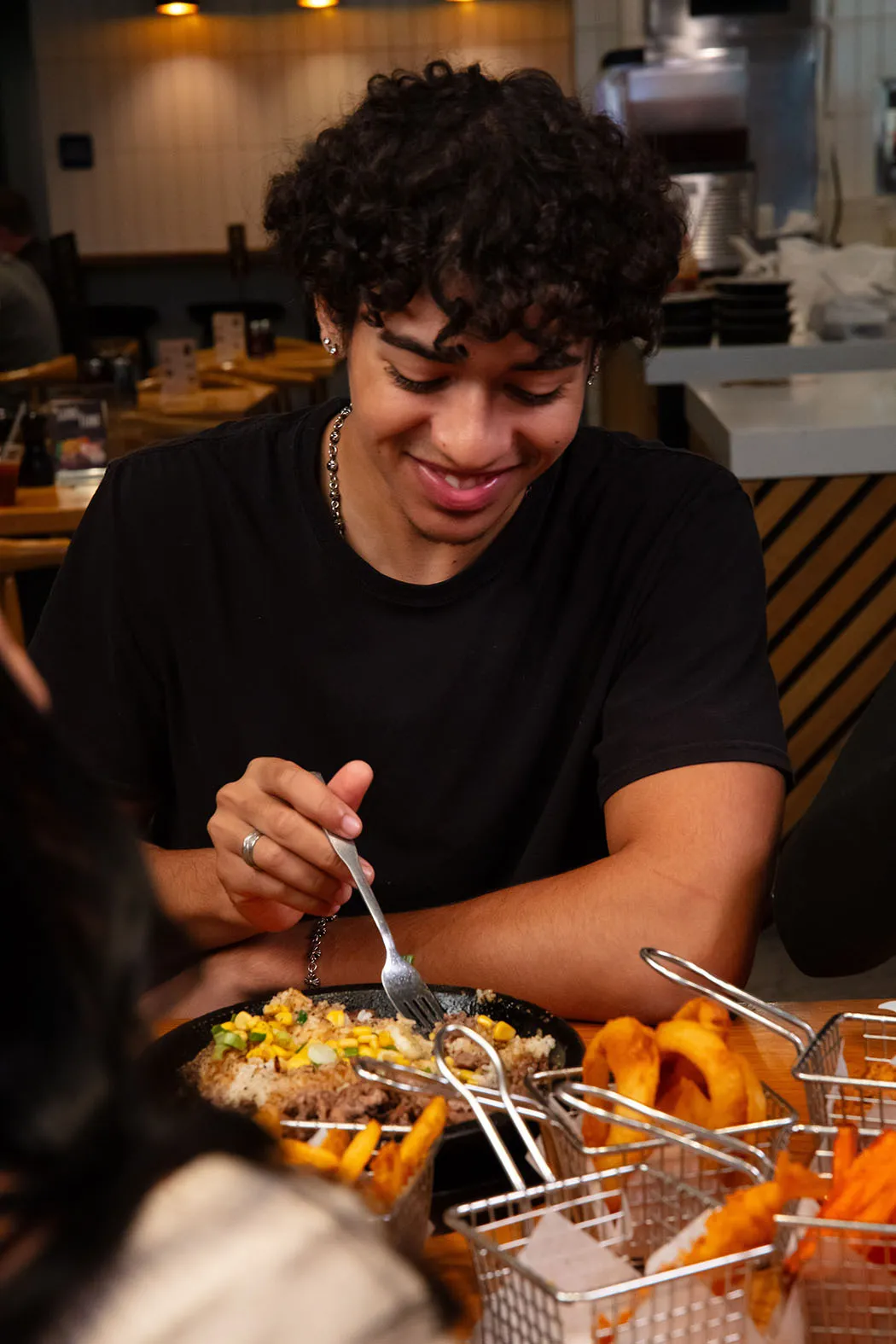
Beyond the financial metrics and market timing, there is a qualitative dimension to this comparison that experienced franchise operators understand intuitively: not all concepts are equally defensible in the long run. Commodity food concepts compete on price, convenience, and marketing spend. Experiential concepts compete on something more durable — the memory of the meal.
The strongest market comparison data isn't in a spreadsheet — it's in the behavior of the operators who had the most options. These are the people who evaluate franchise brands for a living, who have existing portfolios, existing infrastructure, and access to every franchise opportunity in the market. And they chose Pepper Lunch.
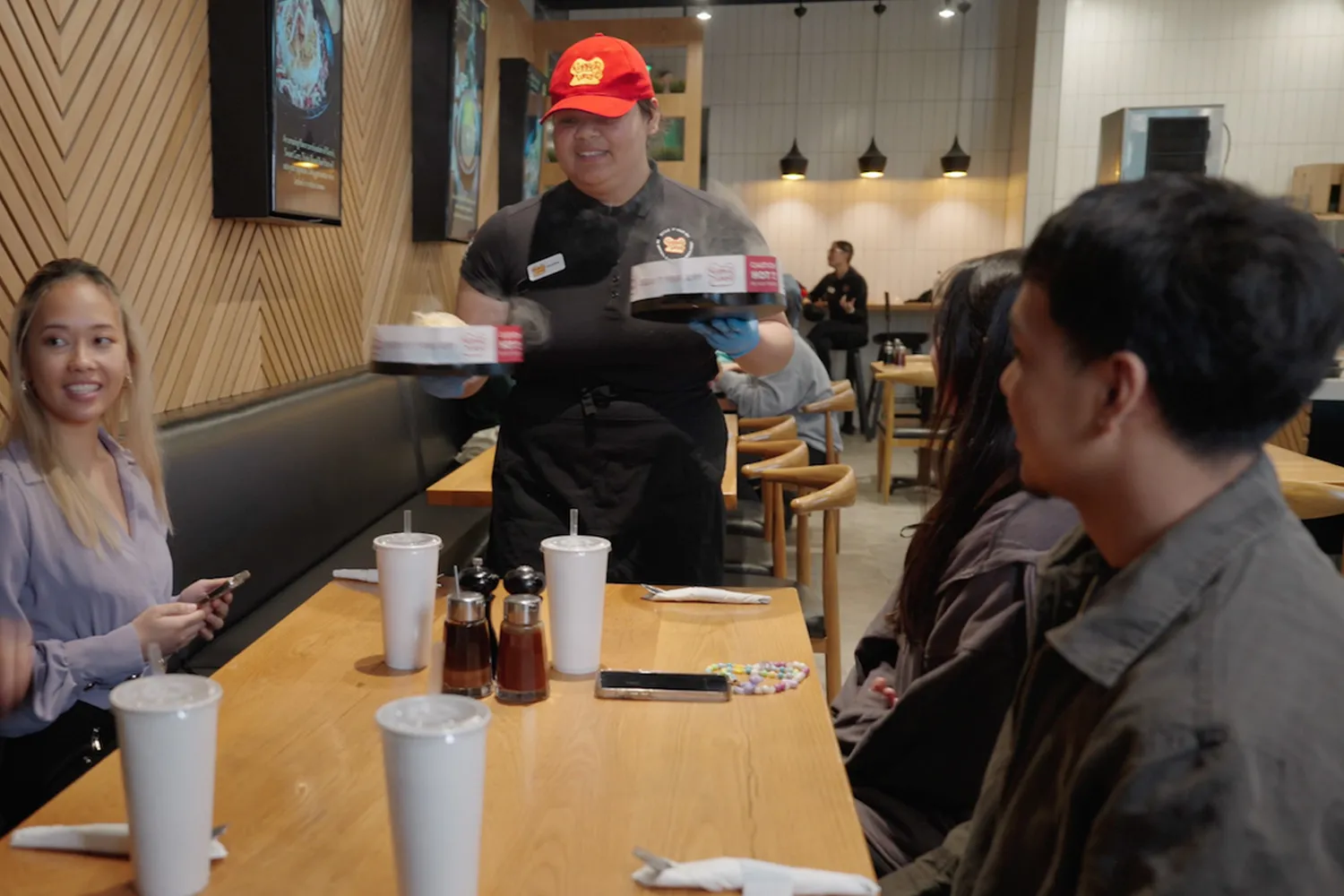

Dave's Hot Chicken reported approximately $3 million in AUV in 2026 — and that is genuinely impressive. It also reflects a brand at the peak of a growth wave, in a category that now has significant competition at every level. Pepper Lunch's $1.652 million AUV grew 24% from 2022 to 2026, with 100% of North American locations posting same-store sales growth. The more relevant question for a multi-unit investor isn't 'who has a higher AUV today' — it's 'who has a higher AUV in five years, in a market I can still enter today at a reasonable cost.'
Wingstop is an excellent company with a proven model — and essentially no first-mover opportunity remaining in any major US market. The brand operates 2,300+ locations and is projecting 16–17% unit growth in markets that are increasingly saturated. The investors who made fortunes with Wingstop did so when the brand had 300 locations and the best territories were available. That window closed years ago. Pepper Lunch's window is open today.
Pepper Lunch has proven its concept in markets as culturally and demographically diverse as Tokyo, Singapore, Sydney, Los Angeles, Phoenix, Tampa, Salt Lake City, and Honolulu. The common thread in all of these markets is not a large Asian-American population — it's a consumer base that responds to quality, value, and an experience worth sharing. That demographic exists in every major US city. The brand's North American expansion results — including strong performance at the ASU campus in Tempe and the Irvine Spectrum in Orange County — confirm that the concept crosses cultural lines effectively.
Brands with real staying power don't come around often. Pepper Lunch has earned a global reputation by succeeding across a wide range of markets and economic conditions while maintaining a loyal customer base and a distinctive dining experience. North America remains early in that growth story, creating a rare opportunity for operators who recognize where the brand is headed before the market fully catches on.
No franchise is right for every investor. If you're looking for maximum brand-name recognition and minimal uncertainty, there are larger, more established brands available. But if you are a sophisticated, well-capitalized, multi-unit operator who knows how to read market timing, evaluate unit economics, and identify category-defining concepts before they saturate — Pepper Lunch is one of the most compelling early-growth franchise opportunities in North America.
The convergence of factors is rare: a three decade global proof of concept, a genuinely differentiated and defensible concept, an accelerating AUV trajectory, and prime territories in America's biggest cities still available today. These windows don't stay open.



