Pepper Lunch Average Unit Volume (AUV) — A Three-Year Growth Story
Consistent growth tells a powerful story. Over the past three years, Pepper Lunch has continued to increase its average unit volume, reflecting strong customer demand, operational excellence, and the long term strength of the brand. It's a clear indicator of the momentum driving the franchise forward.
The Portfolio Math: What Owning Multiple Pepper Lunch Units Looks Like
Based on the 2026 reported AUV of $1.652M, here is a simplified illustration of how a Pepper Lunch portfolio can build significant top-line revenue:
*Estimated range reflects system performance variability. Not a guarantee. See FDD Item 19.
Why Pepper Lunch Unit Economics Work — The Structural Advantages
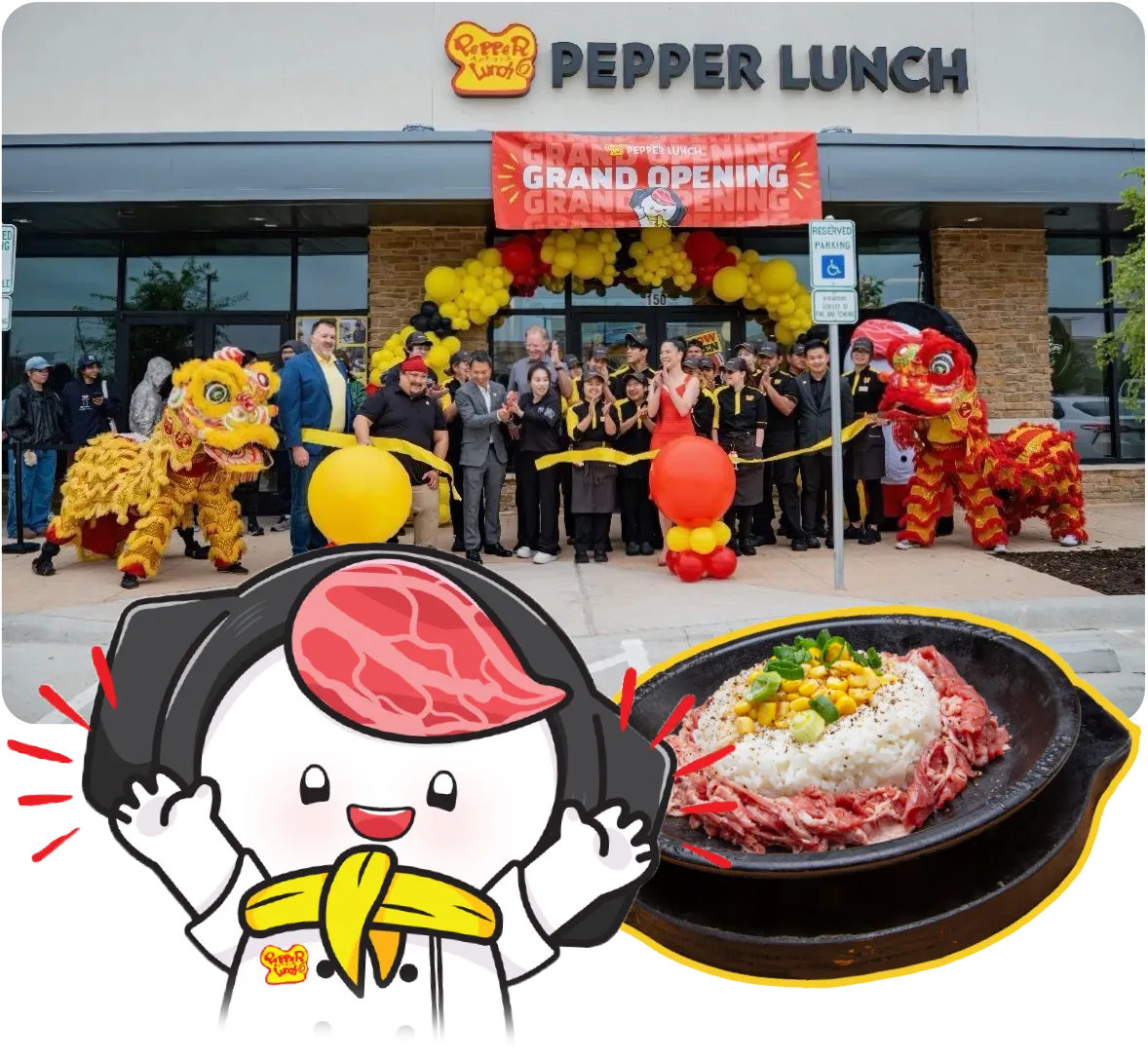
No trained chefs. No culinary staff. Pepper Lunch's hot plate system allows fully cross-trained general team members to run the line efficiently. In an industry where labor is typically the single largest cost driver, this structural advantage translates directly to improved margins versus full-service or chef-driven concepts.
The average Pepper Lunch guest experience takes under 20 minutes from seating to departure. This fast turn time means higher revenue per square foot per hour than slower-service competitors — a critical metric for high-rent locations like mall food courts, transit-adjacent sites, and urban street retail.
At under $20 per guest, Pepper Lunch occupies the premium fast-casual sweet spot: the meal feels like a treat, but the price point doesn't require a special occasion. This positioning has proven resilient across economic cycles in Asia — and the North American data is confirming it here.
While dine-in is Pepper Lunch's primary revenue driver, delivery (DoorDash, Uber Eats, and owned digital channels via Toast) represents incremental revenue without cannibalizing the in-restaurant experience. This dual-channel model captures the full range of consumer ordering behavior.
Most restaurant operators don't know they have a labor or food cost problem until it shows up on a monthly P&L. Pepper Lunch franchisees don't have that problem. Toast POS and Franchise Systems AI give you real-time visibility into labor spend, food cost percentages, and waste at every location — so you can make corrections in hours, not weeks. For multi-unit operators managing 5, 10, or 20 locations, this kind of operational intelligence doesn't just protect margin — it compounds it.
High-ROI Is Built — Not Assumed
Top-performing franchise systems don’t rely on hype — they rely on repeatable operations, disciplined expansion, and unit-level consistency. Pepper Lunch is designed to scale with operators, not against them.